I had the wonderful experience of hearing the BBC Philharmonic perform Mahler’s Ninth Symphony at the Bridgewater Hall on Saturday, 12th April. Goodness gracious, what a piece: stuttering into life with an uncanny heartbeat motif; blazing a path through lively dances; burning with resistance against the omnipresence of death; and finally facing its own finitude—finding, as the music fades, that any attempt to locate closure within the music itself is simply impossible. Bernstein saw this symphony as the death of the 19th century and the beginning of the 20th, but perhaps we can go further: to see the death of the classical and the start of the modern. The piece performs a functional parody of four-movement symphonic form while collapsing the classical idiom of balance and cadential finality, which had haunted the 19th century in a post-Beethovenian afterlife. Mahler 9: the Symphony’s Second Death.
Mahler’s opening gesture—the dysfunctional heartbeat motif—establishes the life-and-death stakes in a suitably dialectical fashion. His failing heart (beset by disease at the time of the symphony’s composition) would kill him, but it was also the only thing keeping him alive. So, this music is borne aloft not by fascination with its own death, but by fascination with its own failure to die. Each rest, each silence, each climax, each cadence functions as a failed attempt to end the music, which always seems to emerge again on the other side of unrealised closure. The piece simply cannot be killed, and it is always hungry for more: another climax, another cadence, another silence. It is the musical undead, and it must be laid to rest if we are to achieve peace from our haunting.
The funeral takes place in the final movement. Never has music seemed so endless as it does here: the melody is replete with the motif of a turn, a gesture which always circles back to where it began. The heartbeat motif of the first movement brought the fragility of life to the fore, bound as it is to the persistent possibility of death. However, the turn motif of the final movement reverses this relationship: if everything always returns to the same place, then all that has happened has simply described a straight and consistent line. There is no fluctuation, and death seems like an impossibility. There is no closure in a turn, as it invokes a repetitive forward momentum that cannot be arrested. How, then, can this music be laid to rest?
The answer to this question lies in a ritual which forever undermines the idea of closure from within the music itself: the ending can only come from the other, from outside the signifying chain. The slow fade to silence that makes up the final few minutes of the piece is an embrace of this otherness. The turn motif still rolls around as the music inches toward the end, but nevertheless the piece continues to fade. As the motif persists, a sublime feeling of oblivion settles into the music: even this idea—pushing toward infinite continuation—cannot avoid the ending. As the final turn comes, and the last chord gradually dies away, it becomes clear that the piece has not truly closed. It has simply merged with the silence that follows—and for a beautiful moment, just a few seconds, we have almost grasped the object of our listening: not the music itself, not even the silence, but the very being of listening.
Then, of course, the conductor closes the score, the audience begins to clap, and we must return to the world. As with any funeral, we are allowed only a fleeting, intimate moment with the departed before mundanity resumes.
Pushing through writers’ block requires an excruciating attention to each individual word. There is delight in making rapid progress through a writing project, an intense enjoyment of the way in which the words pour out of your hands before you have even had an opportunity to internalise them as your own words.
In a fluent stream of text, there is a rich density of possible interpretations, as these words intermingle and procreate. In a thick page of writing, as the visual field gradually fills up with similar looking blocks of black and white, you can lose the ability to distinguish between different items. The same is true on the conceptual level, if every word you consider using seems to refer onwards to all other words, then you may feel overrun by apparently equal possibilities, but you may also begin to pick out one possibility as preferred over others for no clear reason. This is related to something known as the Ganzfeld [total field] effect: in a total field of uniform data (as in white noise), we begin to imagine that a certain part of the field is more prominent than the others. In this hallucination, we are not engaging with the phenomena of the conscious world, but rather we are repeating a pre-existing discourse as if it existed out there in the sensory field. On the level of our identification through language, If we were to lose the hallucination of a real person and a knowledge which precedes the words, we would be struck down by a hysterical loss of our own identity, as we are confronted by these strange and disturbing word-objects which say things we did not intend. Encountering this failure can only force us to create new knowledge, whether it be knowledge about who we are personally or about geopolitics. Writers’ block is what happens at the moment before we generate this new knowledge: it is a total failure of our ability to see a clear path through the infinite possibilities, the Ganzfeld, of things that we could possibly say. Writers’ block is not a lack of things to say, but an excess of them, in which any one possibility seems to be cancelled out by any other possibility.
Words originate from outside of ourselves, passing through our fingertips (the extremity of our interface with the world), moving into the core of our being only after they have already been formed. Nobody is born with vocabulary—there is no pre-loaded dictionary in the newly birthed infant. As we acquire words throughout our childhoods, we learn how to apply them to ourselves. Often, the most significant of these is our name, a special word which has been bestowed upon us by our parents, but we also learn to describe ourselves with words such as “girl”, “boy”, “Portuguese”, “South African”, “black”, “white”, “fat”, “thin”, “tall”, “short”, “unlucky”, “happy”, “Pisces”, “young”, “active”, “educated”, “conservative”, “clever”, or so many other words, all of which were given to us before we knew how to apply them to ourselves. Soon, we have strung together a series of these words and draped them around ourselves as a kind of uniform: a marker of who we are, but nevertheless a marker which has not originated from within myself. And it’s not only the words which we use to consciously identify ourselves, but all of those words we use without even noticing that they say something about us. If you were to write an essay about plant biology, or a letter to your local governmental authority to complain about a parking fine, or a shopping list, or an online guide for growing roses from seed, you are using words which were given to you from outside of your in a manner which has been determined by the way in which you have learned to use language. You cannot write without writing someone else’s words.
Jacques Lacan famously said the “the unconscious is the discourse of the Other.” The unconscious could be conceived of as whatever lies within our words, but beyond the identity we think we have within them. To put this another way, when we use words fluently, we are presenting to ourselves an idea of who we are and what we know, but the way we use these words may have significances of which we are not aware. For example, in a recent episode of The News Agents Podcast, in a discussion of Donald Trump’s reversal of US policy on the Russian Invasion of Ukraine, the hosts mistakenly referred to President Bush, rather than President Trump. In the context of this supposedly dramatic change in US foreign policy, the significance of this slip is not too difficult to work out: given we are within a quarter-century of a US President leading a quixotic imperialist mission to another country, it is perhaps not too much of an aberration for the current president to speak in defence of Vladimir Putin’s blundering attempt to tilt at Ukrainian windmills. Given George Bush’s very own parapractic masterclass of accidentally referring to a “wholly unjustified and brutal invasion of Iraq,” rather than “Ukraine”, as well as the US’s long history of subverting foreign democracies, we are left with a different mystery than the one with which we started: we should not wonder from where these Freudian slips arose, but rather why anyone should ever have presented the US’s policy on Ukraine as one which was based on investment in Ukrainian democracy, rather than in protecting the US’s interests in retaining its global dominance against threats from Russia and China. As I write this, Trump seems to be revising his policy on Ukraine to fit more closely with the policy of the Biden administration. While I am glad that this will likely better support Ukrainian survival against the existential threat posed by Russia under Putin, we should all be grateful that Trump has made public the perennial self-interest of American foreign policy (in much the same way that US bullying of smaller nations was brought into the open by the infamous oval office meeting with Volodymyr Zelenskyy).
In the same way that language surfaces unconsciously to subvert the intended meaning on a geopolitical level, a writer who is struggling to get moving with a project may discover that they are choked by a repulsion against the subversive power of the unconscious. For instance, you may well ask what my preceding discussion of politics had to do with writers’ block. Well, clearly it shows that in forcing myself to overcome my very own writers’ block by constructing this blog post I have unearthed a collection of words which have surprised and diverted my original intentions. We must enter into the world of words with an awareness that we do not know what we are saying. We must be prepared for the terrible discovery that we have said something which we did not intend but which is nevertheless true. We do not speak our words, rather, our words speak us. In the moment of writers’ block, every word becomes precious as every word has the potential to tell us something about ourselves that we did not know: we lose ourselves in torrents of text we produce in moments of fluency, and we find ourselves again when we are struggling to say anything at all. We must allow ourselves to stumble and choke, for our words to ring empty, to catch ourselves in cliché and realise that we have nothing to say, so that we can nevertheless start to say something. Like a “Boltzmann brain”—the theoretical sudden appearance of a highly developed structure in an entropic cosmos—something extremely significant may occur within the void of piece of writing which lacks any energy. Meanwhile, the push towards an energetic flow of words can end up simply reiterating a something which has already been said, thus fixing a text in place and blocking the symbolic flow. To put it another way, through a repetition of a certain form of words—or of the ideas those words represent—we can become fixated on that particular combination, stuck as we are seeing the face of a recently ex-lover everywhere we go, unable yet to imagine a world without them. Being blocked leads to unblocking, while free-flow presents as stasis.
If you don’t know what to say, then the most important thing is to say something.
I remember 2016. I was one of many short-sighted liberals who whole-heartedly believed that there was no way on god’s green earth that Donald Trump could be elected. I remember waking up on the morning after the US went to the polls, to discover that I had been wrong.
I went to university that morning, and I stood outside the door to the music department’s building, smoking a cigarette, trying to catch people’s eyes as they walked past. Did they understand just how insane this was? Did the people around me feel as physically ill as I did? It was similar to the day after the Brexit referendum. On the particular morning, I walked through the streets of Hull—the city where I lived at the time—and I stared at the people around me, mistrustful of these people who had most likely voted to leave the EU in what felt like a blow of ignorant despair against myriad political structures which were at best only tangentially related to the institutions of Brussels. In both June and November of that year, I was looking to find reflection of my own political identity (such as it was at the time) in the faces of people who inhabited a world which had made decisions which frightened me.
In the heat of that antagonism I felt against the world, I — like many other people of various political persuasions — sought out a narcissistic reassurance that my identity was correct and my opponents were mistaken. I found my space where everyone agreed with me, I deepened relationships with those who saw things the way I did and I became distant and hostile towards those who differed from me. The truth is, I never wanted to understand why people voted in the way that they did: for many reasons I was simply scared.
I put my faith (this is the mot-juste for its religious connotations) in the idea that there was some essential core to society which was pushing in the direction of political progress, equality and liberation. Trump and Brexit were aberrations; once these mistakes could be corrected somehow, then normal service could resume. Normal service? What was normal service? I didn’t care to think too closely about it: I needed to believe in some theology of goodness which secured my political position.
I think now that Normal Service was the problem, and only certain political causes had the resources to thwart normal service. Funnily enough, these have been the causes which have ended up benefitting the super rich, while convincing working-class people that their interests are also served by these causes. I was naïve, I didn’t want to see it, I wanted to believe that there is a secure political reality which will save us. In my defence, I wasn’t the only one who was so mistaken.
But here we are again, with Donald Trump once again victorious in the US presidential election. How will I respond? Will I roll over once again and hope for the “grown ups in the room” to restore Normal Service? Will I preciously guard my political identity against a social reality which totally undermines it? Radical change is sweeping the world, but so far it is only in the favour of the despots, the fascists and the totalitarians. The world is changing and we have to change too: if we really believe that these empty words which we throw around—“freedom”, “democracy”, “justice”—mean something, then we must be true to whatever it is that they mean. The world is antagonistic, let’s embrace the antagonism and fight for our beliefs, rather than lying down and hoping that someone else will do it.
I slept badly last night. I wasn’t meaning to follow the American election, but I kept waking up and obsessively checking the results. I felt this morning like I just wanted to bury my head and pretend it’s not happening. But I can’t give in to that privilege when the world is even darker for the people of Palestine, the people of Ukraine, marginalised peoples of the USA. And who knows which government will fall to the fascists next? This is not a time for cowardice. This is a time to look directly at what is happening in the world and to stand against the powerful forces which want to overcome us.
I suppose I should start with a concrete call to action, but I’ve never been very good at this. I’m going to start by joining protests in order to learn from the people who have been raising their voices for much longer than I have been. I’m going to read anything I can read which will help me to understand how we got here: I’d appreciate any recommendations. If anyone wants to start a reading group on political literature which combats fascism then consider me signed up. Do not stop looking at what is happening.
Laurence Osborn’s new piano concerto, “Schiller’s Piano”, which I had the immense pleasure of hearing in its premiere performance by Zubin Kanga and the Manchester Collective on Thursday 10th October, gives a shocking musical account of the construction of a replica piano in a Nazi concentration camp. The true story which informs the piece relates to a piano which was owned by the German poet, Friedrich Schiller. During the war, in order to preserve the piano, the Nazi regime relocated it to an underground bunker, replacing it with the lookalike made by captives at the Buchenwald forced labour camp. The resemblance extended only as far as the exterior of the instrument: on the inside, there were neither strings nor hammers, only a void. As the composer asked in a discussion before the performance, what better metaphor for fascism than this simplistic solution to a complex problem: an ornate facade, constructed in conditions of extreme violence, which masks a barren absence underneath?
Osborn’s music for keyboard is deeply concerned with the tensions and impossibilities which constitute the instrument itself. While other instruments are intimate supplements to the body of the performer—string and percussion instruments as extensions of the limbs, wind and brass as elongations of the respiratory system—the keyboard is an alien anatomy, a bizarre frame which is approached by minimal contact with the fingertips, as if one is touching something which could potentially explode if not handled with care1. In acting upon the foreign entity of the keyboard, through a series of mechanical transformations (and digital transformations, in the case of electronic instruments), the performer’s organic expression is converted into sound. This sound is harder to see as a direct communication of the player—as it is returned it acquires the form of the instrument. No matter how hard or soft one presses on a harpsichord key, the dynamic will be the same. Once a piano key is depressed, the sound will begin to fade. No matter what playing technique is used, a digital keyboard will only replicate the sounds it is programmed to replicate. It is a feature of keyboards which Osborn describes as “Autonomous” (as in his two works for harpsichord and ensemble, “Automaton” and “Coin Op Automata”), the idea that the instrument has a motivation of its very own which is in conflict with the motivation of the performer.
The automatous voice of the instrument is the space of an ideology which interpellates performers in musical discourse. The pianist is not the person who plays the piano, but the person whose identity is found in reflection from the piano: the sound of the piano retroactively hails its player as the person whose desire it was to have made the sound. The reflectivity of musical instruments is the mechanism through which their players come to identify with them. As previously discussed, the embodied experience of many types of instrument is visceral and close for the performer; the identification process is simpler for the player who holds their instrument to their mouth or who cradles it to their chest. But what kind of bizarre second body does the pianist acquire in the funhouse mirror of the 9-foot concert grand?
Perhaps it is not surprising that the piano was the height of musical technology at the onset of the industrial revolution: what better accompaniment for the age of mechanisation and automation than this device which converted minimal input into maximal affect? The piano was the instrument for an age in which organic nature, with its inefficiency and indifference to progress, had been successfully overcome by the aims and ambitions of the machinery which restrained it. In the words of Adorno: “What human beings seek to learn from nature is how to use it to dominate wholly both it and human beings.” In this way, the Piano is an extremely apt instrument for a story which comes from the darkest depths of humankind’s propensity to dominate and destroy.
Osborn’s concerto spins a structure around the construction process of a piano. A large amount of the time, the soloist is using a Midi keyboard to trigger sampled sounds from a piano workshop: the noises—of wood being sawed, of felt being nailed into the frame, of wire being cut and tuned—situate the piece in a relationship with the materiality of its instrument. Perhaps it is not insignificant that this material only exists in the computer-space of the electronic keyboard: the most materially grounded of the sounds being situated in the least tangible of the available instruments. At a very significant moment, notes from the piano are played alongside the sounds of the strings being stretched during the tuning process, creating a kind of impossible portamento effect on the piano. All these noises of wood and wire remind us that the piano is an array of organic and/or flexible materials which have been engineered into a state of precision and inflexibility. Like the labour camp in which prisoners were forced to build the replica of Schiller’s instrument, the piano itself imposes restrictions upon the people who play it; any expression of personality through the instrument is possible only via the tight boundaries imposed by the structure.
How do we save the piano from this totalitarian nightmare? Perhaps there is an answer in the concerto. The replica of Schiller’s Piano is only one piece of musical notoriety to come from Buchenwald; the other is the Buchenwaldlied, a song which was composed by prisoners at the camp at the behest of the Nazi commanding officer at the camp and which makes an appearance towards the end of the concerto. The song’s melody was a simulation of upbeat German folksongs of the kind which might have been very popular with Nazi authorities, but the lyrics tell a complex story: the song’s workers who go into the forest at the break of day may seem to resemble the happy and innocent labourers of nationalist orthodoxy, but the workers in this song don’t simply carry bread with them into the woods, they also carry their sorrows; the sun doesn’t rise to greet the labourers, it rises to laugh at them as they are stuck within their fate at Buchenwald. A particularly astounding image of freedom permeates the lyrics of the song, especially in the refrain of “We still want to say “yes” to life, because one day the day will come – then we will be free!” It is telling that not only did the camp’s officers demand that the interns sang this song, but also there are reports that the prisoners chose to sing the song as an act of resistance which somehow flew under the radar of the authorities. Perhaps this song has the structure of an empty piano: if you do not look closely then the melody is bright and colourful enough to mask the chasm of despair held by the lyrics.
The song’s appearance in the concerto, sang quietly by the soloist into the body of the piano, reveals this very double-life in the face of restriction. it is a moment of intimacy and organicism which cannot originate from the piano, but it is a moment which exists for the piano, rather than for the audience. A piano may be all of the things that have been described above—a strange alien entity, a distorted mirror of the performer, an oppressive machine—but it can only be those things because we have made it so. When a performer plays the piano, they provide the energy and the impetus for the piano to come to life; it may be automatic, but (just as an automatic door runs on power from the mains) it still needs power from the performer in order to run. All instruments are alien extensions of the body, all machines are restrictions of the organic body, all pianos are empty pianos, and all songs are propaganda, but within these limits we can find an image of ourselves which extends beyond the limits themselves. Music is not the materials which make music, but what is lost from those materials when the sound reaches our ears.
A technological development that seems to predict the cold horizons of places we access through modern computing, which finds it zenith in the incorporeal worlds of virtual reality headsets. Perhaps the musical equivalent of these VR devices arose almost a century earlier in the form of the theremin, an instrument which cannot even be touched. ↩︎
Some loose thoughts on Satoshi Kon’s 1997 film “Perfect Blue”
The Following post contains spoilers for the film Perfect Blue.
TW: Violence, Sexual Assault
Satoshi Kon’s 1997 feature-film directorial debut, Perfect Blue, tells the story of Mima, a pop-star who leaves her musical career behind in order to pursue a life as an actor. She discovers a blog which purports to be written by Mima herself and which expresses a desire to leave acting and return to her life as a singer. Mima begins to hallucinate an alternate version of herself who was entirely happy with life as a pop-star and who wishes for nothing more than to please her fans. Meanwhile, the challenges that she faces on the set of the TV show where she is newly employed, a gruesome drama about a serial killer who murders women and wears their skin, probe at the very boundaries of her bodily identity through storylines which force her into scenes of simulated sexual-assault, while she also decides to further her career by participating in a nude photo-shoot. Many of the people who have assisted with her career-change, from her agent to the scriptwriter of the TV show, start being mysteriously attacked and killed, and —in a realisation which mimics the fictional show—Mima starts to believe that she may have committed the murders in a state of dissociation. And through all of this, Mima notices that a stranger has started stalking her at the set of the show. Mima’s reality is now entirely bound up with images of herself over which she has no control: a blogger who claims to be her, a TV show which impinges on her body and her mind, a manager who seems to want to make decisions for her, nude photos which are in the public domain and stalker-fans who demand that she should be a particular version of herself.
The question is, who is Mima with or without these images? When we meet her at the start of the film, we see shots of her performing with her band, “CHAM!”, intercut with shots of her going about her everyday business—taking the train, buying groceries, going home. Perhaps we would distinguish between the “real” Mima, doing her mundane tasks, and the “fake” Mima of the stage performance, but this identification is not so clear, as when asked to identify herself throughout the film, Mima would always refer to herself as some kind of variation of “pop-idol turned actress”. Furthermore, the imposter-blog which Mima discovers has posts which describe in intimate detail the minutiae of her everyday life, such as which brand of milk she always buys and even which foot she leads with when stepping off the train (the fact that on one particular occasion she lead with her left foot instead of the usual right is taken as a sign that her life is disintegrating since she stopped being a singer). These mundane details become just as much of a performance within a demanding gaze as the singing and the acting. There is no moment at which Mima ceases to appear to be some kind of performance. For the sake of this blog post, it should suffice to say that Judith Butler’s analysis of gender as a performative act, as developed in Gender Trouble and Bodies that Matter must be relevant to any more thorough study of Mima’s characterisation, especially as it pertains the experiences which are particular to women which are interwoven with Mima’s story.
The (de)framing of Mima’s reality is artfully interwoven with the framing of the film itself. The opening shots of the movie appear to be from some kind of power-rangers style action-film, before the sequence is revealed to be a performance on a stage in front of a crowd. Not only does this already derealise the boundaries of different modalities of reality within the film, but it also identifies us with the audience within the film: for the first of many moments, we are seeing in this performance what the fictional crowd is also seeing. As Mima’s sense of reality begins to disintegrate, so too do fact and fiction within the movie-space begin to elide. Scenes from Mima’s life run seamlessly into scenes from the fictive TV show, into dreams, into hallucinations. “Real life” begins to resemble fiction, with the “real” murders which resemble scenes from the fictive show and an attempted sexual-assault which mirrors the scripted assault in which Mima acted. The hallucinatory doppelgänger springs forth in Mima’s mind as a coincidence of her own misgivings about her career change and the blog posts which seem to give voice to all of these misgivings: the delineation between her interior and someone else’s image of her interior is just fluid as the passage between different layers of the fictional world.
Not only does the doppelgänger posses Mima’s interiority, but also her exterior becomes a site of conflict and control. Fake Mima usually seems to emerge out of and disappear back into a mirror image; mima will be casually gazing at her reflection in a train window, for instance, before the image mutates into the idealised version of herself. This idealised Mima is always seen wearing the outfit that she wore as a pop-star, a picture-perfect smile on her face, not exactly walking but more skipping and floating from place-to-place. At every level, she is the more perfect of the two as she desires to be nothing more than an image for her fans. She seems to have exactly what Mima does not have or, to put it another way (in order to bring this reading of the film closer to Lacan) she does not have that which Mima has by not having: she is lacking lack. Lack being understood as the thing which desire seeks to fill, fake Mima did not have the desire to leave her former career and cast out afresh, she does not have the desire to take control of her own reality, she exists simply as the image rather than as the desire which is formed in response to the image. This is crucial: Mima is more free than the image because she can never be complete in the way that the image is. Mima is united with all of those who seek to posses her image: the image is the unheimlich completion of that which cannot be completed and it seems to offer an end to a castrating reality in which we are inscribed by lack. Her stalker, the scriptwriter, her agent, her manager, her fans, the nude-photographer, and Mima herself all seek possession of Mima’s image, to lay claim to it as a marker of reality.
Let’s consider the significance then, of the final moment of the film, in which Mima (having overheard people speculating as to whether she was really herself or a lookalike) looks into the rear-view mirror of her car and says “No, I’m real!”. Mima addresses her image in the mirror, but the mirror image looks towards us and addresses the audience. She is performing for the image, while the image performs for the camera. Throughout the film, scenes of crowds have often been associated with cameras: photographers in the audience of the pop concerts, cinematographers on the set of the tv show, journalists trying to break into Mima’s apartment to get her take on the murders which have been committed. Who is though the camera but us, the audience? We are the place where the image is received and imbued with libidinal energy, the place where a reality is constructed. Mima is a performer, both as an actress and as a pop-star. An essential part of the performance lies in sharing ownership of the image with the audience, which Mima does in the mirror at the end: an “I’m real” which is for the mirror, which is for the screen; “I’m real here and now with you” she might say. But if we do not recognise that in lack we have something which the image will not yield to us, then we are condemned to seek possession of the image as our very own and so to create the same disturbing doppelgänger which haunts the characters of the film.
Recently I have written a piece of orchestral music, entitled “Organs without Bodies”. The idea of Organs without Bodies, from the Žižek book of the same name, involves highlighting the impasse between the Organs and the Bodies as the site of production. Whereas a totalising ideological system smooths over the impasses of intractable difference, a dialectical approach (which exposes these impasses) allows for new spaces to be opened up.
Before thinking about Organs without Bodies in a musical context, it may help to think about it from another direction. For example, this article in yesterday’s Guardian looks at generational differences in attitudes to sex scenes in TV and movies. Younger people, of so-called generation z, are put off by gratuitous, voyeuristic, quasi-pornographic and heteronormative depictions of sex in media, preferring instead “to see individuals of all varieties on screen, of all sexualities, romantic attractions and relationship types, from different backgrounds and cultures” in sex scenes which show intimacy and character-driven relationships rather than exploitation and objectification.
The Body (or what Deleuze would call the virtual) here is something which is shared between both approaches: the total idea of the sexual relationship. The Organs may even be the same: a couple, whether heterosexual or homosexual, who engage in sexual activity with each other. What differs dramatically in each case is the path of connection between the Organs and the Body: on the one hand, we have the male gaze which turns feminine sexuality into an object for masculine enjoyment (the masculine being cast as sexually exploitative or voyeuristic), as well as the heteronormatively constituted (even if homosexual) couple who experience sex as an interruption of their relationship (and of the plot of the film or show in which the sex happens) rather than a continuation of it; and on the other hand we have the queer and/or feminine sexual experience, in which people enjoy themselves via the relationship with the other, the relationship itself therefore being of vital importance (and uninterrupted) through the sexual encounter. The production of new approaches to sexuality happens then in the transition from Organs to Bodies (here Žižek differs from Deleuze, who sees the Virtual level of the totalising image as being the site of production).
The older approach to representations of sex in media elevates the sexual encounter out of the Symbolic social structure which contains it, onto the level of the Imaginary: not sexual relationship but Sex. There is no awkwardness, no nerves, no dialogue, not much consideration for consent—this is Sex as transcendental phenomenon, removed from the mundanities of the way we normally relate to each other. It is an ideological presentation of the sexual encounter in which the impasses between the two participants are dropped in order to facilitate the performance of this act. The newer approach brings sex back down into the world of difference which must be negotiated, where the Symbolic social structure continues to hold throughout the encounter. The latter depiction of sex brings the sexual encounter into its properly dialectical space of paradox: the imaginary of Sex can only occur through the Symbolic of the sexual relationship.
That was all a long digression by which I’m able to work out my understanding of the Žižek text. However, what does this mean for compositional musical aesthetics and ideology? Self-consciousiously highlighting the impasses within one’s own music facilitates the paradoxes of music to emerge (silence and sound being the most fundamental impasse of music, the negotiation of which is the Symbolic space in which the musical composition begins to take shape). When confronted with impasse, we negotiate the movement between the opposed elements and when confronted with new impasses we cannot easily fall back on received ideological positions. The ideal and perfect form of the self-conscious composition is that the impasse is so great and so obvious that the audience can only create new negotiations of their own, rather than reverting to the ideological position. While this ideal composition is certainly an impossibility, it is perhaps the same kind of impossibility which exists between the Symbolic sexual relationship and the Imaginary Sex, ie. negotiating the impossibility will itself create a new path to our conception of Music.
In my new composition, I seek to bring these impasses to the fore. There is a regular “vertical” interplay between bars of sound and bars of silence, while there is also a “horizontal” interplay of different musical styles and instrumental groups. Variation in dynamics is usually kept within the much quieter end of the spectrum, but occasional loud intrusions also highlight the impasses between loud and quiet: loud always overwhelming quiet, quiet necessitating the absence of loud. Music is full of these kinds of impasses and in my new composition they should be overwhelming and unavoidable. I turn, then, to those who receive my piece: the conductor, the orchestra, the audience, to ask “how do we proceed through these impasses?” The space of these impasses is the space in which creativity can occur as we construct our path towards a totalising conception of the whole piece. Incidentally, this is also why new work must be constantly created in order to avoid lapsing into conservative ideologies: the space of an impasse is only new when we first travel across it; ideology will march behind us and carve these spaces up in a process of territorialisation, leaving paths and roads through the impasses which will discourage us from the freedom of unfamiliar routes.
The orbiting fantasies of Barbieland, Barbie’s “real world” and the audience’s “real world”
A still image from Barbie (Gerwig, 2023)
Contains spoilers for the films Barbie and the Truman Show
In the recent film, Barbie (Gerwig, 2023), action takes place in two separate worlds: Barbieland and “the real world”. Barbieland is the fictive world in which Barbie dolls, Ken dolls, and other related properties of the toy company, Mattel, all live. “The real world” is the world in which human characters play with—and the world in which Mattel manufactures—the dolls. Using the interaction of these two worlds one can posit a deeper, more central reality in a way which draws on a tradition of ontology which stems back to Immanuel Kant. This system of reality is subjective, and is accessed via the experiences of the characters of the film, such that the relationships of the characters in the film is of vital, ontological importance. Furthermore, the interrelating realities of Barbie operate as a mirror of the interaction between the world of the audience—the audience’s “real world”—and the world of the film, such that the ontology of Barbie teaches us how to understand the way in which fiction impacts upon “reality”.
1) Death: the point of interconnection
The protagonist of Barbie is Stereotypical Barbie (henceforth referred to simply as Barbie), played by Margot Robbie, a Barbie doll who lives in Barbieland. Barbieland is presented as a utopia of feminine power, in which the various Barbies (all women) hold a variety of significant and important careers, from doctors, to political leaders, to Nobel prize winning writers etc. Meanwhile the Kens of Barbieland (all men) lead shallow and less significant lives: for instance Barbie’s Ken, played by Ryan Gosling, explains that his job is “just beach,” which seems to mean standing by the shore and holding a surfboard (but not actually surfing). We see Barbie leading an average day of her life: waking up in her luxurious Barbie House, eating perfect foods, spending time with her successful Barbie friends and being fawned over by her Ken, whom she seems to have little interest in. During a spectacular party which she hosts at her house in the evening, she asks her friends “Do you guys ever think about dying?”. This unexpected awareness of her own mortality is the first major crack in Barbie’s relationship with herself, and demonstrates a lack at the heart of her reality which becomes the motivation for the rest of the events of the film, leading Barbie to journey to “the real world” to help the person, presumed to be a little girl, who is playing with her and causing her to have these experiences.
We later learn that the reason Barbie has been suffering from existential dread is because Gloria, a woman in “the real world” who works for Mattel and who raises a rebellious daughter, has been playing with a Barbie doll and using this play as an outlet for her own anxieties. Here, we see the function the two worlds have for each other: Barbieland is an object for “the real world” to reflect on “the real world’s” deficiencies; and “the real world” symbolises the lack at the heart of Barbieland, which enables the object, Barbie, to come alive in an attempt to fill that lack. Observe the paradox here: people of “the real world” use Barbie as an object to contain their own lack, but using Barbie as such causes Barbie herself to experience this lack. This experience of lack draws Barbie’s subjectivity to the surface and she no longer functions as the dead object that “the real world” requires.
In all of this grappling with reality, we can naturally read the presence of Kantian ontological traditions. For Kant, all of our senses, our means of knowing the phenomena of the world, exist on the side of the observer and, therefore, there is another side (the side of the observed): that which really is—the thing in itself—can only be known by reason and understanding. Insofar as we accept the reality of our observations (an act of understanding), we acknowledge some aspect of reality beyond what we have observed (Kant, 1783). Before Barbie travels there, the residents of Barbieland can only posit “the real world” as the reality which is beyond their reality, but whose presence is felt in Barbieland. The character of Weird Barbie explains that the reason Barbie is suffering from a variety of crises is because a girl in the real world is playing with her in such a way as to provoke these experiences. “The real world” seems at this stage to be the thing in itself: behind the phenomena that Barbies experience, there must be some reality which is more real.
However, during the film we see Barbie and Ken travel to “the real world”. This makes “the real world” into an object of sense, and therefore it cannot be understood as the thing in itself. You may wonder why I have consistently placed “the real world” within quotation marks, and here we find the reason why: by visiting “the real world”, and gaining experience of it, we see it being given the same status as Barbieland, as a space which is attainable via the senses. If Barbieland is not real, then “the real world” can be no more real, for they are both knowable in the same ways; or, to put it the other way, if “the real world” has the mark of reality, then so must Barbieland. Here, let’s remember what Hegel says about self-consciousness, that it “is faced by another self-consciousness; it has come out of itself” (Hegel, 1807). Is the same not true of these competing realities? By recognising reality in “the real world,” Barbieland must see itself with the same means it uses to see the Other: by reflecting on the reality of “the real world”, Barbieland can see that the same reality runs through itself. Furthermore, if “the real world”, after gaining direct experience of Barbieland, maintains that Barbieland is a fantasy space, then the experience of fantasy in Barbieland is an extension of the way in which “the real world” is experienced. At this point, we must acknowledge the next paradox that we have encountered: for Barbieland to be self-conscious qua reality, via “the real world”, and for “the real world” to be self-conscious qua fantasy via Barbieland, fantasy and reality must inhabit the same space: a single continuum of fantasy-reality which encompasses Barbieland and “the real world”.
The role of death in Barbie’s fractured reality is of utmost ontological importance. In Freud’s terms, “The goal of all life is death,” (Freud, 1922) a paradox with profound implications for Barbie’s reality. An awareness of death, an awareness of her ultimate telos, marks her out as living. For Freud, the Death Drive is a drive of the ego; the ego is tasked with enforcing a coherent image of reality, as a point of mediation between the id (which seeks pleasure via the sex drive) and the external world. While the id seeks always to maximise pleasure, the Ego is more concerned with the minimisation of displeasure, even if this means accepting a small amount of pain in order to avoid a larger amount. This, for Freud, is the reality principle: a delay on the immediate attainment of pleasure which the id seeks; the reality principle replaces the pleasure principle and so inflicts pain by way of mediating the satisfaction of desire (Freud, 1916-17)1. The id is the objective part of the psyche, an objectivity which explains the pleasure principle as the retention of objective wholeness – the object in itself. The ego is therefore the seat of subjectivity, and while the pleasure principle of the id “is in some way connected with the diminution, reduction or extinction of the amounts of stimulus prevailing in the mental apparatus” (ibid), the ego’s reality principle functions as the opposite of this annulment of stimulus. The psyche, under the influence of the reality principle, becomes stimulated, divided, disintegrated: the drive which fulfils the reality principle results in a non-whole reality. For Barbie, awareness of death results in this fragmentation and she seeks for a large part of the movie to return to the prior state of ignorance; a state in which she is simply an object (she is only alive and a subject insofar as she is moving towards death).
Here, let us venture an answer to the Billie Eilish (2023) song which plays at the end of the film, “What was I made for?”: the “I” of the question, the ego, was made to enforce reality, but the reality it enforces is necessarily lacking; “I” was made to incorporate death into the psyche and to establish a subjectivity which contains its own negation.
2) The Nothing around which reality orbits
After Barbie returns from “the real world” with Gloria, they discover that Ken, having been inspired by “the real world”, has established a patriarchal system in Barbieland in which all the other Barbies seem to be willing participants. Discovering that she is unable to restore Barbieland to the way it was before, Barbie falls into a deep depression, during which time Gloria spells out the paradoxes at the heart of her experience of womanhood:
we have to always be extraordinary, but somehow we’re always doing it wrong. You have to be thin, but not too thin…You have to have money, but you can’t ask for money because that’s crass. You have to be a boss, but you can’t be mean. You have to lead, but you can’t squash other people’s ideas. You’re supposed to love being a mother but don’t talk about your kids all the damn time. You have to be a career woman, but also always be looking out for other people. You have to answer for men’s bad behavior, which is insane, but if you point that out, you’re accused of complaining… always stand out and always be grateful. But never forget that the system is rigged. So find a way to acknowledge that but also always be grateful… It’s too hard! It’s too contradictory and nobody gives you a medal or says thank you! And it turns out in fact that not only are you doing everything wrong, but also everything is your fault.
Gloria, in Barbie (Gerwig, 2023)
Accepting the feeling of never quite getting it, never quite being there, always seeming to have missed the mark, is essential to Barbie’s recovery from her depression. Here is the Kantian horizon of reality: the thing in itself never emerges, and any attempt to find it will only succeed in pushing it further away. And here is the Freudian Death Drive in which every attempt to mediate pain results in a mediation of the mediation. Barbie must live with paradox, with the essential impossibility of her being: all attempts to live in the world point to the thing in itself, the nothingness which secures reality.
Fig. 1: in a system of bodies of equal mass, the barycentre would be exactly equidistant between the two bodies Fig. 2: in a system of bodies of unequal mass, the barycentre would be closer to, or even below the surface of, the more massive body.
In astronomy, the concept of the barycentre refers to the dynamic point around which a system of bodies orbits. For instance, while in everyday language we might say that the planets of the solar system orbit around the sun, the gravitational pull of the planets moves this orbital centre (the barycentre) to a point just beyond the surface of the sun, such that all the bodies—the planets and the sun itself—orbit around this point (Ridpath, 2012). We could theorise that if more bodies were added into the orbital system, the barycentre would move further and further from the sun. Such is the structure of reality: each account of it is like a new body which enters into the orbital system, pulling the point of the Real (the real reality, the thing-in-itself) further and further out into dead space, equidistant between all realities. This barycentric reality is visible in Žižek’s account of repetition:
Repetition is not only repetition of something that cannot be repeated and, in this sense, repetition of the impossibility of repeating, but repetition of something that does not exist in itself, that emerges only retroactively through its repetition.
Žižek, 2017
The barycentre is the point which is created retroactively, through the introduction of new bodies. For Žižek, this can be seen in the repetition of a novel in a film adaptation:
The film does not “repeat” the novel on which it is based; rather, they both “repeat” the unrepeatable virtual X, the “true” novel whose spectre is engendered in the passage from the actual novel to the film.
Žižek, 2017
Is the same not true of the relationship between Barbieland and “the real world”? Barbieland is a fictional universe created by Mattel and modelled on “the real world”, but it is an adaptation of “the real world” which “corrects” certain errors present within that world. Barbieland is a matriarchal society, and as such it is a body of mass which pulls the barycentre away from the patriarchal society of “the real world”. Barbieland acts upon “the real world” as one massive body acts upon another massive body, the former changes the path of the latter; as the narration at the beginning of the film says, “Because Barbie can be anything, women can be anything,” (Gerwig, 2023). Of course, the latter body also changes the path of the former and the extent to which one body is more or less effected by the other is dependent on their relative mass. In this instance, “the real world” must surely be seen as the more massive of the two worlds, to the extent that the entire structure of gender-based power which manifests in Barbieland is a formal replica of patriarchy in “the real world”, even while the relative power of the genders is inverted in Barbieland. In fact, the power of Barbies in Barbieland is not truly power that Barbies have acquired for themselves, but power which Mattel has invested into them.
The film itself is a repetition of our “real world”; it recalls content and structures from our world (Barbies and Kens, women and men, fantasy and reality, manufacturer and commodity, matriarchy and patriarchy) and recreates them on screen. If our reality shares the form of the Barbie’s reality, then we and the film are simply satellites around a barycentric reality, which is posited (much like the Kantian thing-in-itself) once we see that our reality is an observant reality, facing towards some unseen observed.
3) Letting go of the objective other in order to embrace subjectivity
The barycentre is what Lacan calls objet a, “the void presupposed by a demand” (Lacan, 1972-73). The demand that Barbieland should be perfect and unblemished by death, ageing and other imperfections, is an attempt to otherise the void. The characters literally posit the problems of Barbieland on the side of the big Other2, “the real world” as the symbolic order which secures the function of Barbieland. Think of it this way: we are introduced to “the real world” in the prologue to the film, which explains that before Barbie, girls only played with baby dolls, role-playing as mothers and homemakers, but with the invention of Barbie, girls could now envision themselves in different and changing roles as women; from the point of view of its inhabitants, Barbieland is only a meaningful place insofar as (either consciously or unconsciously) there are problems in “the real world” to which Barbie is the answer. It is the judgement of the big Other (as “the real world”) which stipulates that Barbieland should be a place of feminine utopia, free from death or aging, free from civil unrest or disharmony; and if Barbieland is like this then it is only meaningful because “the real world” is not those things. However, when those imperfections infiltrate into Barbieland, we see that they actually belong to the little other (objet a), the idealised other which is actually a reflection of the self: the void is a part of Barbieland.
The antagonistic force of the film, as represented variously within Ken, Mattel and Barbie herself, is the force of otherisation and objectification. When Ken says to Barbie “I only exist within the warmth of your gaze” (Gerwig, 2023), he is ensnared within the clutches of these antagonists: his reliance upon Barbie to guarantee his existence is indicative of a failure to live with nothingness; he requires an object, Barbie, to fill the hole of his uncertain being. Ken cannot be authentically subjective while he hinges his existence upon Barbie’s continuation as an object as he is trapped in mis-recognition, whereby he attempts to see himself as a completed object via another supposedly completed object. But, of course, Barbie is incomplete and she cannot be the wholeness which Ken is desperate to reflect from. The fictional executives of Mattel are determined, throughout the film, to render Barbie as an object, to the point of attempting to literally put her in a box. For Mattel, the wholeness and objectivity of Barbie translates into commodification and economic value—Barbie rendered as something which can be priced and sold. For Mattel, Barbieland is a product: for a price the consumer can buy “female empowerment”. The character arc of the Mattel CEO is resolved when they discover they can make money from selling “Ordinary Barbie”, who suffers the same everyday problems and anxieties as ordinary women. Where once Mattel boxed and sold female empowerment, now they can box and sell female ordinariness: the id-like objectifying power of capitalism trundles on in the background of Barbie’s subjective story.
For Barbie, she begins perfectly content to be an object: to be a doll without ageing, or death, or cellulite. Her depressive breakdown in the middle of the film is the product of her desperate desire to remain an object. However, at the end of the film, Barbie chooses to become “a real woman”. This moment is comparable with the moment in The Truman Show (Weir, 1998) at which the character Truman (who has discovered that his entire life has been filmed and broadcast on television, and that every person he knows is a paid actor) decides to open the door at the edge of Seahaven (the fictive town in which he has been incarcerated) in order to leave his former life behind. At the edge of his reality, Truman gains a vision into a new reality which is not orchestrated by scriptwriters, directors and actors. By crossing the threshold, he steps from a known reality into an unknown one, which is supposedly more real than the one he has hitherto inhabited. The problem is, the idea that Seahaven is less real depends upon the greater reality of the outside world, and vice versa. As Simone Knox puts it:
In The Truman Show , both the inside and outside can be understood as having a primal lack; an inside cannot be conceived of without an outside. The one requires the other to fill up this lack and complete it.
Knox, 2010
For the viewers of the fictional show from which the film takes its name, the reality and authenticity of their lives is guaranteed by the fantasy and falsehood of Truman’s life. For Barbie, “the real world” is only real insofar as Barbieland is not real. She, like Truman, faces out across a threshold on a new kind of reality. The reality Barbie chooses is one in which her subjective lack is actualised in the form of sexual organs and medical appointments; a world in which the mundanity of human, bodily frailty is treasured for its ability to encapsulate the goal of the ego as it charts a path towards death: subjective living.
Ending
On the first day of Barbie’s life that we witness, before she is confronted by awareness of death, she says “It is the best day ever. So was yesterday and so is tomorrow and every day from now until forever” (Gerwig, 2023). In a perfect reality, unencumbered by death (or objet a), there is no differentiation: every day is the best day; every day is the same. To put it another way, in a universe of only one, continuous substance, there is no barycentre and there is no orbit: there is only whole, totality of being. Continuous substance is as good as Nothing—a state of continuous one-ness is maximum entropy: inert and dead. This very paradox of perfection reveals imperfection: perfection is self-decaying. It is only through decay that difference may be observed and the very fact that there is an observer presupposes this decay and differentiation. Barbie’s reality never was perfect—even before she became aware of death, her world is a world of repression. This repression is evident in the shunting of Weird Barbie to the edge of Barbieland: Weird Barbie is evidence of the nothingness that Barbieland traverses in its interaction with the Other (“the real world”). Weird Barbie exists: this very fact shows that decay is breaking through. Consider the fact that Barbie’s thoughts of death are labelled “irrepressible” by the characters of the film: they break out from the repression which previously characterised Barbieland.
Differentiation has its own problem: it creates boxes in which we do not-quite fit. Barbie is not-quite an inert object. Ken is not-quite a harmless, bland idiot. Barbieland is not-quite fantasy and “the real world” is not-quite real. To exactly grasp what all of these differentiated things quite are is to identify them as the barycentre of their own reality. But the barycentre is not an object for itself: it only exists for the not-quite realities which orbit it. To claim a self-sustaining reality which is concentric with its own barycentre is to return to that continuous whole substance, which is a Being entirely contiguous with Nothing. Differentiation into ever-shifting not-quite is the arc of life; coming-to-terms with life is acceptance of this not-quite. What better example than when Ken has the epiphany, “Ken is me” (Gerwig, 2023); he does not say “I am Ken”, for this would be an over-identification. He is not, as he previously sang, “just Ken”: since his Ken-ness is only guaranteed by Barbie’s gaze, without Barbie that would mean that he is nothing. And yet, there is a something which escapes from the boxing-off of Ken-the-object and, by saying “Ken is me”, he places the Ken part of himself into the objective position, finally allowing his subjectivity to escape around the cracks of the not-quite Ken.
It is important to note that Freud does not use the Latin terms, Id and Ego, but instead the German das Es and das Ich (in english, the it and the I). Ego is best thought of as the psyche’s self-conception, a kind of return from the id which posits a controlling “I” with the power to restrain the id through identification. This “I” with the power to control the id, however, is a fiction insofar as the subject is concerned: the posited controlling “I” is not the ego, but the superego, the perfect “I” which exerts complete control, while the “I” of the ego is stuck in limbo between perfect order and perfect disorder; a state of half-being in which “I” never truly is so long as the id enforces instincts and drives which cannot be restrained. Ego is a state of Hegelian becoming, in the dialectic of a subject which proceeds from being (Superego), to non-being (id), to becoming (ego). Superego is the absolute recoil: the absolute “I” retroactively posited as logically prior when the ego returns out of the id (absolute recoil and retroactivity are both central to Slavoj Žižek’s ontological position in Incontinence of the Void (Žižek, 2017)). ↩︎
For Lacan, there are two meanings of other: the big Other (A) and the little other (a) [hence why objet a is often called objet (petit) a, to distinguish it from A]. A is the other in “radical alterity” (Evans, 1996), as the other which cannot be identified with, while a is the other which is not truly other at all, but rather a projection of the ego. ↩︎
Bibliography
Eilish, B. (2023). What Was I Made For? [Song]. Barbie the Album. Atlantic.
Freud, S. (1916-17). Introductory Lectures on Psychoanalysis (1973 Penguin ed.) (J. Strachey, trans.). Penguin.
Freud, S. (1922). Beyond the Pleasure Principle (C.J.M. Hubback, trans.). The International Psycho-Analytical Press.
Gerwig, G. (2023). Barbie [Film]. Heyday Films, LuckyChap Entertainment, NB/GG Pictures, Mattel Films, Warner Bros.
Hegel, G.W.F. (1807). The Phenomenology of Spirit (A.V. Miller, trans.). OUP.
Kant, I. (1783). Prolegomena to any future metaphysics (P. Carus, trans.). Chicago, Open Court Publishing.
Knox, S. (2010). Reading “The Truman Show” Inside Out. Film Criticism, 35(1), 1-23. Retrieved 27 Aug. 2023 from https://www.jstor.org/stable/44019392.
Lacan, J. (1972-3). The seminar of Jacques Lacan: Book XX: On feminine sexuality, the limits of love and knowledge (J.-A. Miller, ed.) ( B. Fink, trans.). Norton.
An exploration of retroactivity in music through Lacanian and Žižekian theory
I, the composer, wish to project into the future. I sit at the manuscript paper and I ask myself, “How will my piece end?”
The inevitability of the ending is something we may take for granted. Ultimately, there will be an ending: a fixed point of gravitational convergence in which the trajectories of a life (the life of a universe, a society, a person, an opus, a sentence) will reach their singularity. If we ask “how will it end?”, then we represent our desire for mastery of the future. Is that our own ability to master the future, or is it the future’s mastery of us? In wishing to know the end, do we not really ask for our future to be fixed, for the possibility of freedom to be erased? The question of “how will it end?” is a hysterical one.
“What the Hysteric wants” says Jaques Lacan (1969-70), “is a master”. Mastery is not within our grasp, it occupies the position of the other. In Lacan’s discourse of the Hysteric, a hysterical question such as “how will it end?” Is borne out of desire for the master signifier to produce knowledge. The knowledge which is produced by our question is mastered by the ending; the fact of an ending is an empty realisation. I say empty because the purpose of the ending is not to be the content, but to contain the content, much as a glass contains water. Everything which is not an ending is rich with interconnected meaning which conforms inexorably with the end. If we wish to know the end, we must look back rather than forward.
Fig. 1
Lacan’s Discourse of the Hysteric1
In the horizon of our future, we see the reflection of our past. That which we know we have done and which we know we have not done is the shape of what will follow. To put it another way, we can only do something of which we can conceive; present conception is a fertilisation of one past by another. I, composer, site of conception, have sought mastery of classical forms, I have sought access to the past, I have aligned myself with the dead. I, composer, site of conception, have allowed myself into servitude of the strange otherness which flows from the past, which escapes into my work in such a way that I am only the wall which fugitive past excavates into a tunnel. Past is the genome of present. Genes may function as determinant, but if they are the sole determinant then what can we cultivate? In a world which genetics forecloses, we may do nothing but procreate and die. Out of genetics and in opposition to it, we establish meaning which exceeds physical fact, we overcome physical boundaries in pursuit of goals which cannot be set genetically. Conscious past: a state of mastery and of calcified cul-de-sacs, of retreating shores of ever finer and finer knowledge; and Unconscious past: the Real beyond the knowable, the genome which boundaries our endeavours in ways we can’t ever fully understand. At the nexus of these two pasts, we find ourselves setting forth into the future. Observing identifiable past is the first step towards new interpretation. The next step is to understand there is another past which your historiology has not yet encompassed.
“According to the standard view, the past is fixed, what happened happened, it cannot be undone, and the future is open, it depends on unpredictable contingencies. What we should propose here is a reversal of this standard view: the past is open to retroactive reinterpretations, while the future is closed since we live in a determinist universe.”
Žižek, 2019
In composing the ending a piece of music, we re-compose the entire piece. The ending, though it means nothing in itself and it leads nowhere further, provides definition to the whole. If I have composed a chorale for SATB chorus in the style of JS Bach, and then I choose to finish the piece with an improvised drum solo, the meaning of the chorale is changed by the ending: the chorale is a chain of events which will lead inevitably to a drum solo. The same is also true if I choose to end, much more conventionally, with a Perfect Authentic Cadence in the choir: we read an inevitable progress towards the conclusion because we know what the conclusion will be. As composer, I do not compose the end of the piece at all: I choose an interpretation of the piece as it unfolds until that point, and then I allow the inevitable ending to happen.
Retroactive re-signification is of increasingly vital social importance in the field of music. For instance, when programming a concert, we must ask “How does this concert serve as master signifier? How does this concert contain and shape the past?” Asking this question should lead to two realisations: 1) our programming choices shape our relationship with music history and 2) this has always been the case, even when we were not aware of it. Ask yourself, for instance, “why are so few women composers programmed in concerts?”. The answer lies in the shape we give to the past. As Diane Peacock Jezic wrote in 1988:
“Because traditional musicology has tended to perpetuate study of “the great masterpieces” composed by “the great masters,” it has been musicians working in nontraditional disciplines (such as American music, black composers, or women’s studies) who have begun to reexamine the nature of musicology”
Jezic, 1988
Musicology gives legitimacy to itself via the “greatness” of the music it studies. The study of “great” music ensures the future of musicology and ensures the past of music: the canon of great composers is a tool for stifling the flame of new creations and inseminating the future with dead music. [The dead music I write about is present at the heart of much of my output, but then that would make sense genetically: many of my ancestors are dead]. Let’s work this through with an example. Heinrich Schenker, who wrote on composers such as Bach, Handel, Beethoven, Brahms, Bruckner and other germanic musicians from the 17th, 18th and 19th centuries, tells a story about music in which all music refers back to a few “great” composers. If, after Schenker, there is no interest in music which recalls those past composers, then there is no use for schenkerian analysis. Any adaptation of schenkerian analysis which allows for a greater diversity of composers to be analysed will create a dialectical path in which Bach, Beethoven, Brahms etc. must be recognised in the new composers who are to be considered (recognised by their absence, if not by their presence). Thus, at the heart of a schenkerian conception of what it means to be a composer, you will find those German men whom Schenker studied. Any successful musicology will restrict all music within its own bounds.
Jezic’s perspective shows a strong retroactive restructuring, both from the nontraditional musicians she cites and within her own evaluation of the past, which creates a nexus of choice. Do we choose the past of the “great masters” or the past of American music, black composers, women’s studies etc.? Programming a concert is an act of retroactive signification; the concert only has meaning in terms of the past which it organises; without history, music is meaningless.
“Our “Self’ is composed of narratives which retroactively try to impose some consistency on the pandemonium of our experiences, obliterating experiences and memories which disturb these narratives. Ideology does not reside primarily in stories invented (by those in power) to deceive others, it resides in stories invented by subjects to deceive themselves. But the pandemonium persists, and the machine will register the discords, and will maybe even be able to deal with them in a much more rational way than our conscious Self. For instance, when I have to decide to marry or not, the machine will register all the shifting attitudes that haunt me, the past pains and disappointments that I prefer to sweep under the carpet.”
Žižek, 2017
The composer is an ideological self of music. Music, organising the past, predicting the future, wells up from the unconscious, but is perverted into conscious form in service of a coherent composer-identity. In the Lacanian sense, composition must be a hysterical act in which the composer takes music as master signifier. A demand for creation from the master, definitionally a master which can not create, results in the composer creating for themselves and ascribing it to the master. Music is a product of misrecognition from the composer; the composer’s own desire channelled into the mouth of music/master signifier. Only in this form will a composer accept their own new creation: the creation is a piece of music or it is nothing at all. What goes unacknowledged, at least at first, is the excess which sits at the heart of the compositional process: the thing which a composer seeks to symbolise in music but which remains unsymbolised.
At this juncture, we can make some observations which will merit further consideration. A composer seeks to write music, and this is more true than the composer necessarily understands, as what they write is not a pieceof music, but rather music is made from what the composer writes. Put another way, the past of music is rewritten each time a composer composes, rather than the future of music. If we allow the use of our Lacanian jargon, we can say that music occupies is a master signifier, and therefore its only role is to stand in as metonym for the signifying chain it contains. Furthermore, every concert is a rewrite of the past, re-historicising music and imposing a new master signifier. Creation, whether generative (composition) or curatorial (programming), is a hysterical act which exposes the master signifier and the knowledge which it organises. The social implications of this way of thinking should be clear; society is organised under master signifiers which can entail oppression and exclusion (as in Jezic’s observation of the musicological structures which fix a masculine understanding of composer. Self-conscious musical retroactivity implies a radical reassessment of the social construction which flows through signifiers of music history and allows for a rewriting of the past in order to change the path of the future.
1 In Lacan’s Discourse: “a” is objet (petit) a, the surplus enjoyment which cannot be resolved into the symbolic and which represents the object cause of desire; “$” is the barred subject, the incomplete and desiring subject of all discourse; “S1” is the Master Signifier, the empty signifier without a signified which gives order to the signifying chain which precedes it; and “S2” is all other signifiers and knowledge. The diagram of the discourse can be read as saying that the subject of the discourse of the hysteric is motivated by desire for a master, and the product of this desire is new knowledge.
BIBLIOGRAPHY
Jezic, D. P. (1988). Women composers: the lost tradition found (2nd Ed.). The Feminist Press
Knowledge of other, which has been an integral part of the dialectical motion of knowledge up until now, is absorbed into knowledge of self. This is the outcome of knowledge’s self-consciousness: all that is known of the other is truly knowledge of the self. However, the Other lingers as an integral part of self-knowledge’s movement or, as Hegel says:
“When we consider this new form and type of knowledge, the knowledge of self, in its relation to that which preceded, namely, the knowledge of an other, we find, indeed, that this latter has vanished, but that its moments have, at the same time, been preserved”
Those “moments” of the Other exist “in themselves”. Previously, “meaning” has dealt with the relationship between particulars and perception (universal), a relationship which passes through the “empty, inner region of understanding”. If the moments of the other are in themselves, then they are particulars: in themselves they have no inner region of understanding; in themselves they have no meaning. Meaning, in relation to these moments of the other, only emerges when the moments of the other are set against the movement of self-knowledge.
x = moments of the Other
y = movement of self-knowledge
(x–>y)–>y qua x
In other words, the moments of the other no longer give any account for self-knowledge, they are entirely sublated within it. Returning to our exclusively symbolic treatment of this dialectical motion from the annotations on the paragraph 166, we have already observed that x-in-itself is empty and meaningless; it is only in relationship to y that x takes on any meaning. As Hegel says:
“self-consciousness is reflexion out of the bare being that belongs to the world of sense and perception, and is essentially the return out of otherness”
x, the subject, is not conscious until it has seen itself as the other of y, the object. Indeed, x is not conscious of itself as subject until it can see itself as object-for-another. And so, not only is the other sublated as a moment in self-knowledge but, in self-knowledge (the “return out of otherness”), the x-in-itself is also lost. The initial, pre-dialectical moment—“the simple fact of having independent subsistence for consciousness”—is a matter of no substance: as self-consciousness returns from the other, it cannot distinguish itself-in-itself from itself as a product of movement from other.
x = itself-from-other
y = itself-in-itself
(x–>y)–>y qua x
As itself-from-other gives way to itself-in-itself, itself-in-itself is simply holding the symbolic place of itself-from-other.
So, for self-consciousness, the other must exist as a thing which is different from the self, but also, self-consciousness emerges within this difference between the self and the other. Self-consciousness is conscious of the other, as experienced through the ability to perceive other as object; self-conscious is only the unity of self-consciousness with itself.
x = self-consciousness perceives the other
y = self-consciousness is unity with itself
(x–>y)–>y qua x
Self-consciousness, unified with itself, occupies the place of perception of other, and so the other in perception is unified with self-consciousness-in-itself. The difference between self-consciousness and the other, which is essential for self-consciousness, is only a superficial appearance for self-consciousness—it does not have the quality of “being”. In self-consciousness, the difference between self-in-itself and self-for-another is undone as self-consciousness attains unity with itself.
First we deal with the dialectic, and then self-consciousness.
It must begin with x.
x is a simple place-holder, entirely empty, yet full of the potential for meaning.
x is the first instance, it is the pre-dialectical place-holder. It is the moment of naïve clarity, to which many (Buddhists, Heidegger etc.1) might wish us to return. It is a tantalising moment, in that all moments of clarity which follow will be lesser (though, more wise and knowledgeable) as they progress. If only we could return there, to that emptiness, to that perfect negation of all which will follow.
However, with x, there must be not-x. And, in fact, we knew it already, since we already knew enough to give x a symbol. In the moment of pre-dialectical clarity, we have no symbols to ascribe to this object. So from x to not-x, the dialectic can do nothing but begin.
In all instances, I will symbolise the dialectical movement thus:
(x–>y)–>y qua x
x and y are simple place-holders
–> is a symbol meaning “gives way to”
So, for that symbolic formulation to be true, we must believe that the process of a first symbol giving way to a second, causes the giving way (of the first symbol to the second) to itself give way to the second symbol as being able to occupy the place of the first symbol.
We can demonstrate this by now expanding the symbolic meaning to our placeholder symbols.
x = x in itself
y = not x
(x–>y)–>y qua x
By x giving waytonot x, we see that not x is equal in symbolic function to x; y can itself occupy the symbolic function of x (y in itself), thus turning x into not y. Therefore:
(y–>x)–>x qua y
Thus, in symbolic function, if not in any other function, x = y.
Moving on:
x = objectknown from the position of itself [from now on: object in itself]
y = object known from the position of not-itself [from now on: object for another]
(x–>y)–>y qua x
The object for another is itself an object. An object can be for another and it can be in itself. Therefore, an object for another can be in itself an object in itself (y qua x). Furthermore, For the other, y is not object for another at all, but it is object in itself, while x is object for another:y is y in itself; y is x for another, and x is y for another. The object is in itself for itself; however, from the position ofanother, the other is object in itself. Object in itself does not relate to itself as object except through an other. Therefore, Object qua object is Object for another, whereas Object in itself is not object at all, but conception of object via the dialectical movement of self-knowledge: object in itself is prior to the other, and to be without the other is to be unbounded and infinite ; the introduction of the other (y) produces boundaries on the Object (x); y knows x qua object; x knows y qua object; the knowledge of the other is knowledge of the object, therefore Object in itself (prior to knowledge of the other) is not constituted as object.
Thus, we have motion from Object in itself qua object, giving way to Object in itself qua not-object.
x = objectknown from the position of itself
y = not-object known from the position of itself
(x–>y)–>y qua x
For us, as student of this dialectical motion of object (as Object in itself, as Object for another, as concrete thing of conception etc.), we see object give way to not-object, and in so doing we are able to constitute exactly the object of our study – the dialectical motion of object; or, to put it another way:
x = object (as focus of our study)
y = not-object (as focus of our study)
(x–>y)–>y qua x
[And, of course, x qua y]
In our knowledge of object, we see what Hegel calls “the movement of knowledge”, which he proposes we might call “conception”. If we instead see this knowledge as a single, discrete entity (or a “simple unity” in Hegelian terms2), which Hegel suggests we call “object”, then we have the makings of another dialectical progression.
x = knowledge as dialectical movement; conception
y = knowledge as simple unity; object
(x–>y)–>y qua x
The knowledge which arises through movement gives way to knowledge as a simple unity, yet this opposition itself gives way to simple unity existing as movement, to knowledge-object existing as knowledge-conception. As Hegel says, for knowledge itself, “the object corresponds to the conception”. Finally, we arrive at something very important: the idea that knowledge has knowledge of itself; the self-consciousness which is Hegel’s concern in this chapter of the phenomenology.
1Fordiscussions on the relationship between Heidegger and Buddhism, and the evaluation of Dasein as what I call the Hegelian “first instance”, see McGowen, T. & Engley, R. (Hosts). (2021, 5 September). Heidegger and Hegel [Audio Podcast Episode]. In Why Theory. SoundCloud. https://soundcloud.com/whytheory/heidegger-and-hegel
2Hegel also suggests this can be called “Ego”, which could potentially be very interesting to probe into, but the opportunity doesn’t yet present itself.
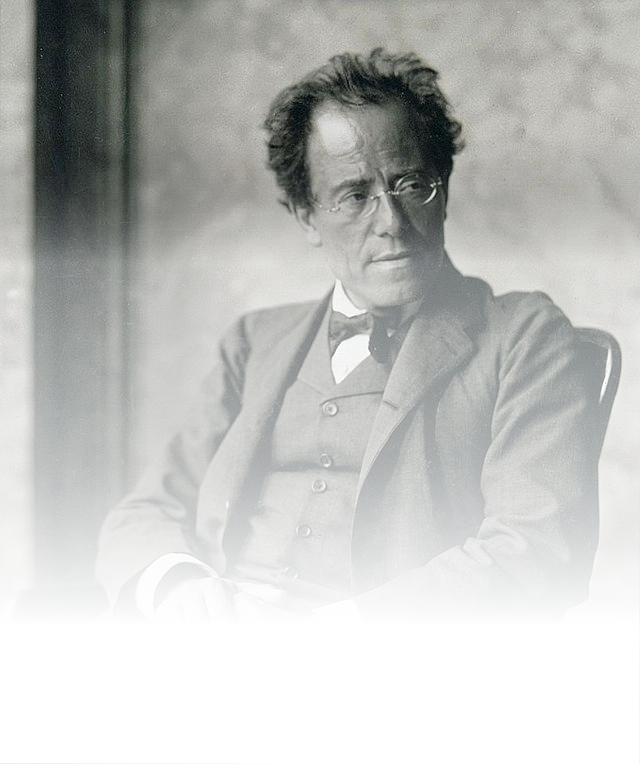
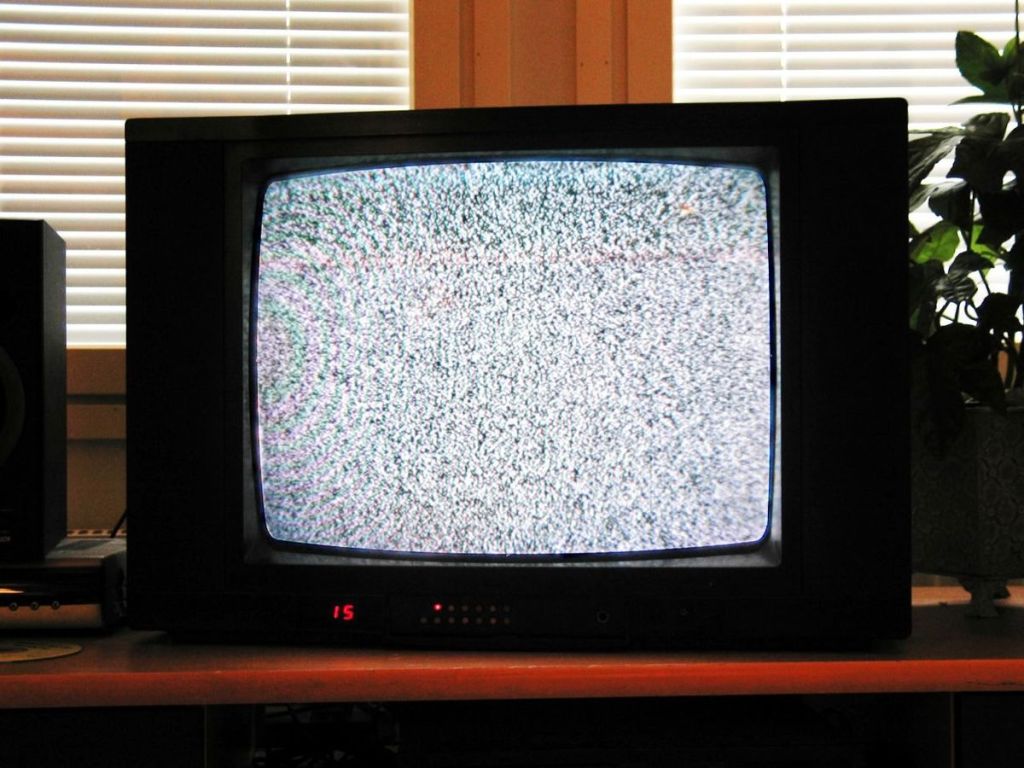

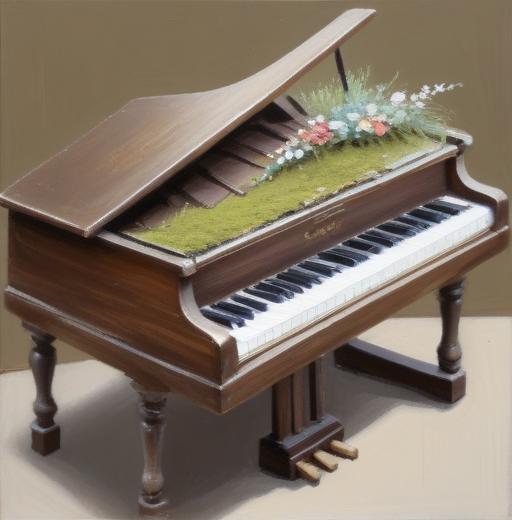




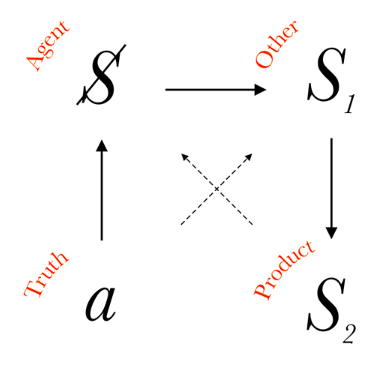
 James Waide