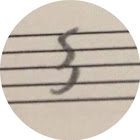
Annotations from ¶ 167 of Hegel PdG
x = knowledge of self
y = knowledge of other
(x–>y)–>y qua x
Knowledge of other, which has been an integral part of the dialectical motion of knowledge up until now, is absorbed into knowledge of self. This is the outcome of knowledge’s self-consciousness: all that is known of the other is truly knowledge of the self. However, the Other lingers as an integral part of self-knowledge’s movement or, as Hegel says:
“When we consider this new form and type of knowledge, the knowledge of self, in its relation to that which preceded, namely, the knowledge of an other, we find, indeed, that this latter has vanished, but that its moments have, at the same time, been preserved”
Those “moments” of the Other exist “in themselves”. Previously, “meaning” has dealt with the relationship between particulars and perception (universal), a relationship which passes through the “empty, inner region of understanding”. If the moments of the other are in themselves, then they are particulars: in themselves they have no inner region of understanding; in themselves they have no meaning. Meaning, in relation to these moments of the other, only emerges when the moments of the other are set against the movement of self-knowledge.
x = moments of the Other
y = movement of self-knowledge
(x–>y)–>y qua x
In other words, the moments of the other no longer give any account for self-knowledge, they are entirely sublated within it. Returning to our exclusively symbolic treatment of this dialectical motion from the annotations on the paragraph 166, we have already observed that x-in-itself is empty and meaningless; it is only in relationship to y that x takes on any meaning. As Hegel says:
“self-consciousness is reflexion out of the bare being that belongs to the world of sense and perception, and is essentially the return out of otherness”
x, the subject, is not conscious until it has seen itself as the other of y, the object. Indeed, x is not conscious of itself as subject until it can see itself as object-for-another. And so, not only is the other sublated as a moment in self-knowledge but, in self-knowledge (the “return out of otherness”), the x-in-itself is also lost. The initial, pre-dialectical moment—“the simple fact of having independent subsistence for consciousness”—is a matter of no substance: as self-consciousness returns from the other, it cannot distinguish itself-in-itself from itself as a product of movement from other.
x = itself-from-other
y = itself-in-itself
(x–>y)–>y qua x
As itself-from-other gives way to itself-in-itself, itself-in-itself is simply holding the symbolic place of itself-from-other.
So, for self-consciousness, the other must exist as a thing which is different from the self, but also, self-consciousness emerges within this difference between the self and the other. Self-consciousness is conscious of the other, as experienced through the ability to perceive other as object; self-conscious is only the unity of self-consciousness with itself.
x = self-consciousness perceives the other
y = self-consciousness is unity with itself
(x–>y)–>y qua x
Self-consciousness, unified with itself, occupies the place of perception of other, and so the other in perception is unified with self-consciousness-in-itself. The difference between self-consciousness and the other, which is essential for self-consciousness, is only a superficial appearance for self-consciousness—it does not have the quality of “being”. In self-consciousness, the difference between self-in-itself and self-for-another is undone as self-consciousness attains unity with itself.
 James Waide