Pushing through writers’ block requires an excruciating attention to each individual word. There is delight in making rapid progress through a writing project, an intense enjoyment of the way in which the words pour out of your hands before you have even had an opportunity to internalise them as your own words.
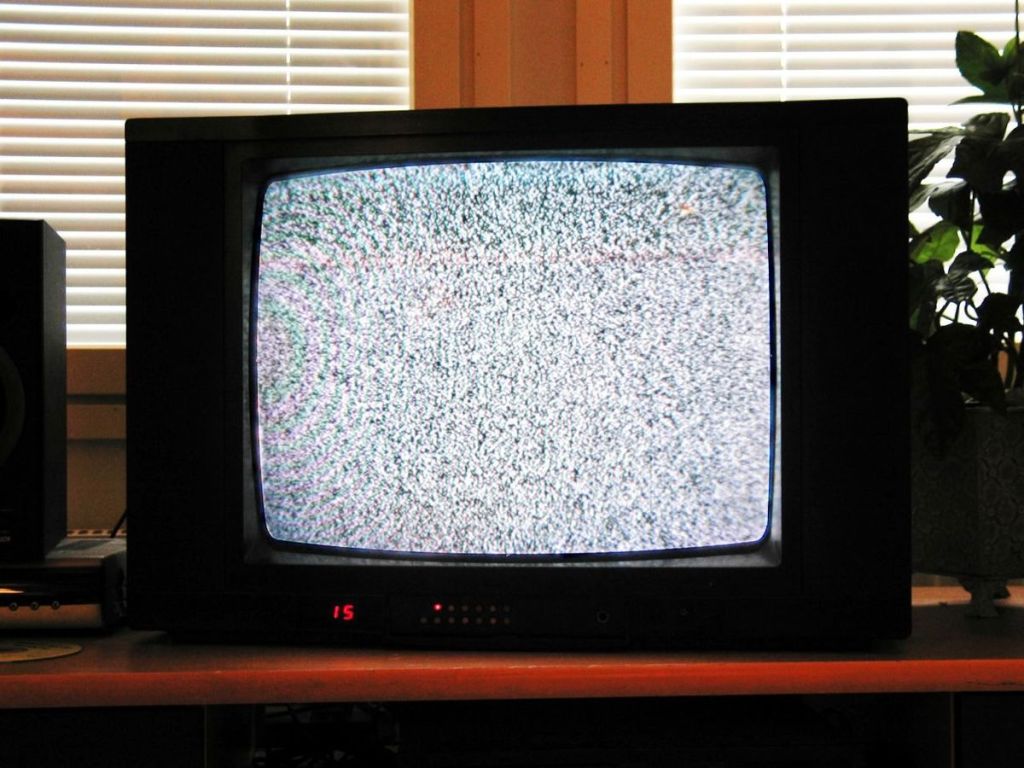
In a fluent stream of text, there is a rich density of possible interpretations, as these words intermingle and procreate. In a thick page of writing, as the visual field gradually fills up with similar looking blocks of black and white, you can lose the ability to distinguish between different items. The same is true on the conceptual level, if every word you consider using seems to refer onwards to all other words, then you may feel overrun by apparently equal possibilities, but you may also begin to pick out one possibility as preferred over others for no clear reason. This is related to something known as the Ganzfeld [total field] effect: in a total field of uniform data (as in white noise), we begin to imagine that a certain part of the field is more prominent than the others. In this hallucination, we are not engaging with the phenomena of the conscious world, but rather we are repeating a pre-existing discourse as if it existed out there in the sensory field. On the level of our identification through language, If we were to lose the hallucination of a real person and a knowledge which precedes the words, we would be struck down by a hysterical loss of our own identity, as we are confronted by these strange and disturbing word-objects which say things we did not intend. Encountering this failure can only force us to create new knowledge, whether it be knowledge about who we are personally or about geopolitics. Writers’ block is what happens at the moment before we generate this new knowledge: it is a total failure of our ability to see a clear path through the infinite possibilities, the Ganzfeld, of things that we could possibly say. Writers’ block is not a lack of things to say, but an excess of them, in which any one possibility seems to be cancelled out by any other possibility.
Words originate from outside of ourselves, passing through our fingertips (the extremity of our interface with the world), moving into the core of our being only after they have already been formed. Nobody is born with vocabulary—there is no pre-loaded dictionary in the newly birthed infant. As we acquire words throughout our childhoods, we learn how to apply them to ourselves. Often, the most significant of these is our name, a special word which has been bestowed upon us by our parents, but we also learn to describe ourselves with words such as “girl”, “boy”, “Portuguese”, “South African”, “black”, “white”, “fat”, “thin”, “tall”, “short”, “unlucky”, “happy”, “Pisces”, “young”, “active”, “educated”, “conservative”, “clever”, or so many other words, all of which were given to us before we knew how to apply them to ourselves. Soon, we have strung together a series of these words and draped them around ourselves as a kind of uniform: a marker of who we are, but nevertheless a marker which has not originated from within myself. And it’s not only the words which we use to consciously identify ourselves, but all of those words we use without even noticing that they say something about us. If you were to write an essay about plant biology, or a letter to your local governmental authority to complain about a parking fine, or a shopping list, or an online guide for growing roses from seed, you are using words which were given to you from outside of your in a manner which has been determined by the way in which you have learned to use language. You cannot write without writing someone else’s words.
Jacques Lacan famously said the “the unconscious is the discourse of the Other.” The unconscious could be conceived of as whatever lies within our words, but beyond the identity we think we have within them. To put this another way, when we use words fluently, we are presenting to ourselves an idea of who we are and what we know, but the way we use these words may have significances of which we are not aware. For example, in a recent episode of The News Agents Podcast, in a discussion of Donald Trump’s reversal of US policy on the Russian Invasion of Ukraine, the hosts mistakenly referred to President Bush, rather than President Trump. In the context of this supposedly dramatic change in US foreign policy, the significance of this slip is not too difficult to work out: given we are within a quarter-century of a US President leading a quixotic imperialist mission to another country, it is perhaps not too much of an aberration for the current president to speak in defence of Vladimir Putin’s blundering attempt to tilt at Ukrainian windmills. Given George Bush’s very own parapractic masterclass of accidentally referring to a “wholly unjustified and brutal invasion of Iraq,” rather than “Ukraine”, as well as the US’s long history of subverting foreign democracies, we are left with a different mystery than the one with which we started: we should not wonder from where these Freudian slips arose, but rather why anyone should ever have presented the US’s policy on Ukraine as one which was based on investment in Ukrainian democracy, rather than in protecting the US’s interests in retaining its global dominance against threats from Russia and China. As I write this, Trump seems to be revising his policy on Ukraine to fit more closely with the policy of the Biden administration. While I am glad that this will likely better support Ukrainian survival against the existential threat posed by Russia under Putin, we should all be grateful that Trump has made public the perennial self-interest of American foreign policy (in much the same way that US bullying of smaller nations was brought into the open by the infamous oval office meeting with Volodymyr Zelenskyy).
In the same way that language surfaces unconsciously to subvert the intended meaning on a geopolitical level, a writer who is struggling to get moving with a project may discover that they are choked by a repulsion against the subversive power of the unconscious. For instance, you may well ask what my preceding discussion of politics had to do with writers’ block. Well, clearly it shows that in forcing myself to overcome my very own writers’ block by constructing this blog post I have unearthed a collection of words which have surprised and diverted my original intentions. We must enter into the world of words with an awareness that we do not know what we are saying. We must be prepared for the terrible discovery that we have said something which we did not intend but which is nevertheless true. We do not speak our words, rather, our words speak us. In the moment of writers’ block, every word becomes precious as every word has the potential to tell us something about ourselves that we did not know: we lose ourselves in torrents of text we produce in moments of fluency, and we find ourselves again when we are struggling to say anything at all. We must allow ourselves to stumble and choke, for our words to ring empty, to catch ourselves in cliché and realise that we have nothing to say, so that we can nevertheless start to say something. Like a “Boltzmann brain”—the theoretical sudden appearance of a highly developed structure in an entropic cosmos—something extremely significant may occur within the void of piece of writing which lacks any energy. Meanwhile, the push towards an energetic flow of words can end up simply reiterating a something which has already been said, thus fixing a text in place and blocking the symbolic flow. To put it another way, through a repetition of a certain form of words—or of the ideas those words represent—we can become fixated on that particular combination, stuck as we are seeing the face of a recently ex-lover everywhere we go, unable yet to imagine a world without them. Being blocked leads to unblocking, while free-flow presents as stasis.
If you don’t know what to say, then the most important thing is to say something.
 James Waide
Wonderful ♥️
LikeLike